Polotzk
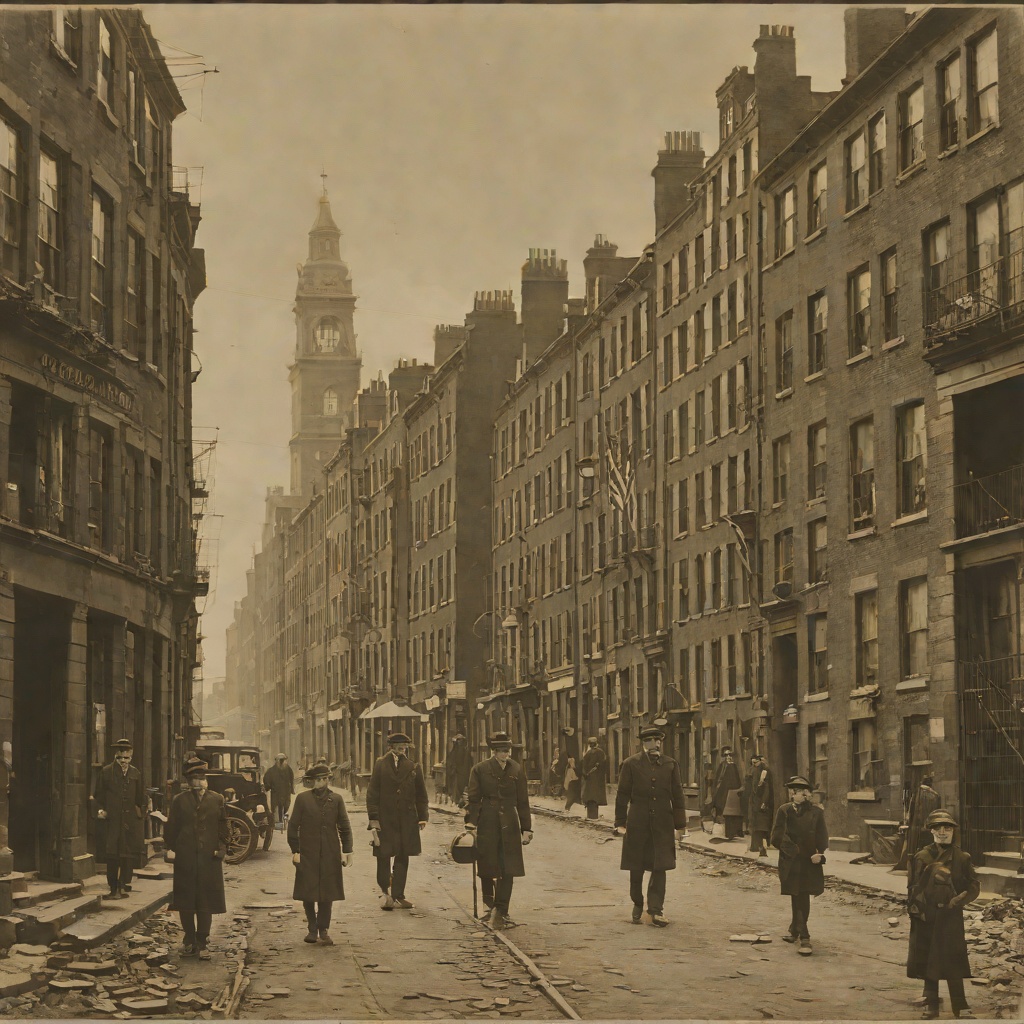
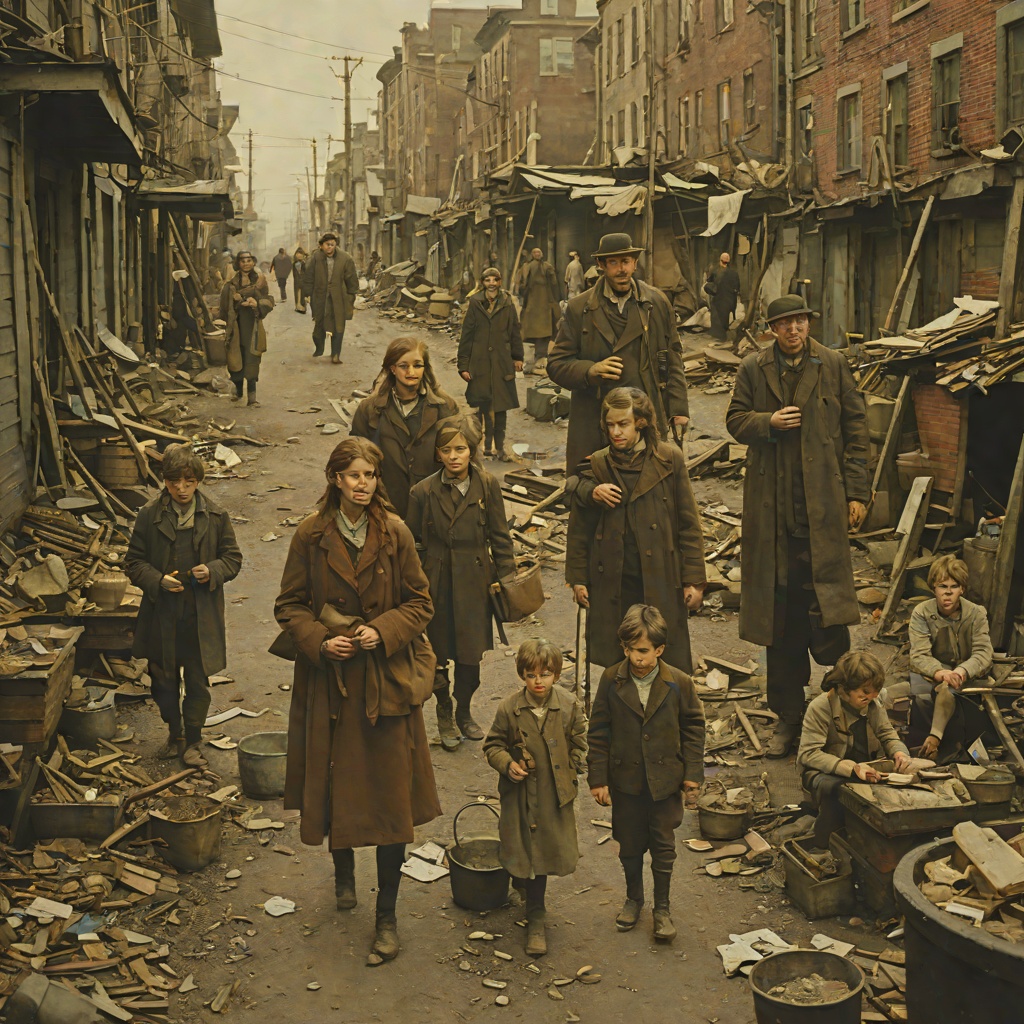
The Captain and Ann BarbaraPolotzk, also spelled Polotsk, is the town in the government of Vitebsk, Russia, where Mary Antin was born and where she lived until her family's emigration to America. In her memoir, it stands as the fixed point of origin, the place against which all of her American experience is measured. The book's opening chapter, "Within the Pale," establishes Polotzk not merely as a geographical location but as the center of a child's entire universe: for the young Mary, the world was divided into two parts — Polotzk, where she lived, and a strange, distant land called Russia, where one's father went on business and where so many bad things happened that mothers and grandmothers cried at the railroad station when a man departed. This early framing makes Polotzk the known, safe, and comprehensible home, while everything beyond it is shadowed by danger and sorrow.
A Town Within the Pale
The decisive fact of Polotzk's existence was its location within the Pale of Settlement, the designated area where the Czar commanded Jews to live. Mary learned that Polotzk, along with Vitebsk, Vilna, and other towns, was grouped together as the Pale, and that she and her family were forbidden to be found outside it simply because they were Jews. This knowledge came gradually, "drop by drop," so that by the time she fully understood she was a prisoner, the shackles had grown familiar to her flesh. The town was thus encircled by an invisible but absolute fence, and the world was divided into Jews and Gentiles. The lesson of Polotzk's confinement was the first lesson a little girl in the town had to learn, taught by grandmothers at bedtime, by parents giving holiday presents, by playmates pulling her back into a gateway to let a policeman pass, and even by Vanka, the little white-haired Gentile boy who threw mud at her, then spat on her, until she accepted ill-usage from Gentiles as one accepts the weather.
The town's subjection to the Czar was total and crushing. The Antin family, like all Jewish families in Polotzk, owed a bewildering array of duties and taxes: taxes on houses, on rents from houses, on business, on profits, collected by the town, the county, and the central government. Special taxes were levied for public works, yet rotten pavements went on rotting year after year. Even a railroad bridge across the Dvina, while open to the military, could be used by ordinary people only by individual permission. The excise duties on tobacco were taxed at every step of the process — the tobacco separately, the paper, the mouthpiece, and an additional tax on the finished product — with no tax on the smoke, which the Czar had evidently overlooked. Business could not pay under such a burden, and the only way to make it pay was to cheat the government, a dangerous game with spies watching, police raids in the night, and ruinous fines. The people's helpless shrug — "What can one do? One must live" — expressed the resignation of the entire Pale.
The Burden of Conscription
Polotzk's Jewish community also lived under the shadow of military conscription, which was a far more serious burden than mere taxes. Most men of twenty-one, the age of conscription, were already married with children, and their families suffered and their businesses were often ruined during their absence. At the end of their term they were sent home as beggars, stripped of any good uniform and given a shabby one, a free ticket for the return journey, and a few kopecks a day for expenses — hurried back into the Pale like escaped prisoners. The dread of this service drove men to inflict injuries on themselves, submitting to operations on their eyes, ears, or limbs in the hope of being rejected at the physical examination. Many operations succeeded and the men went free, but often the intended temporary deformity proved incurable, leaving many men in Polotzk blind of one eye, hard of hearing, or lame — conditions easier to bear than the memory of four years in the Czar's service. The Czar always got his dues, even if it ruined a family: a poor locksmith owed three hundred rubles because his brother had escaped Russia before serving, a fine that applied only to Jews, and the police attached his household goods, including his young bride's trousseau, selling them for thirty-five rubles. When they came again a year later for the balance, they sealed everything they found, leaving the bride, in bed with her first baby, not even a sheet to wrap the child in for his circumcision the next day.
A Girl's Education in the Kitchen
Within Polotzk, the roles of boys and girls were rigidly divided. Boys attended heder from before nine in the morning until eight or nine at night, studying Hebrew and the sacred texts. But for a girl, it was enough to read her prayers in Hebrew and follow the Yiddish translation at the bottom of the page; a couple of terms with a female teacher finished her education. A girl's real schoolroom was her mother's kitchen, where she learned to bake, cook, manage, knit, sew, and embroider, while her mother instructed her in the laws of a pious Jewish household and the conduct proper for a Jewish wife. Every girl hoped to be a wife, for a girl was born for no other purpose. Marriage was a sacrament, and to rear a family of children was to serve God, fulfilling the ancient promise to Jacob that his seed should be scattered over the earth. Parenthood was the great career, but while men might also busy themselves with the study of the Law, woman's only work was motherhood. To be left an old maid was the greatest misfortune that could threaten a girl, and the whole family would strain every nerve to ward it off, contributing to her dowry, hiding her defects from the marriage broker, or praying and fasting. The pressure to marry in order of age was so strict that a cousin of Mary's, a firm and masterful girl, was hastily married to a boy of little known character, inclined to consumption, simply because she wished to marry before her elder sister who had been rejected by one mother-in-law after another.
The House of Memory
Mary's earliest memory of Polotzk is the house where she was born — her grandfather's house, which stands in her memory as a small, one-story wooden building whose chimneys touch the sky at the same level as its neighbors' chimneys. The house stood even with the sidewalk, but the yard was screened from the street by a board fence, outside which there was a bench. The gate swung so high from the ground that pigs found their way in under it, grunting on arrival and squealing on departure. Of the interior she remembers only one room, and not so much the room as the window, with a blue sash curtain and, beyond it, a view of a narrow, walled garden where deep-red dahlias grew. The garden belonged to the house adjoining her grandfather's, where lived the Gentile girl who was kind to her. This small, modest house, with its pigs and its dahlias, is the concrete image of Polotzk that Mary carries with her — a place of poverty but also of a certain homely intimacy, far removed from the grandeur that memory might have invented.
The Measure of America
Polotzk's deepest significance in the memoir is as the contrasting term against which America is defined. When the family arrived in Boston and was ushered into three small rooms on Union Place, off Wall Street in the West End, containing only necessary beds with lean mattresses, a few wooden chairs, a table or two, a mysterious iron structure that turned out to be a stove, a couple of unornamental kerosene lamps, and a scanty array of cooking utensils, the family was nevertheless impressed. This was not only because they had passed through seven lean years in Russia, cooking in earthen vessels and eating black bread on holidays, but chiefly because the new home represented a break from the confinement of Polotzk. The contrast between the two places is also a contrast in the fate of women: Frieda, Mary's sister, came to America too late to avail herself of the gifts of an American girlhood, and was engaged to be married before the family had been two years in the country, under the old dispensation of Polotzk. Had she been two years younger, she might have gone to school, imbibed American ideas, and clung to her girlhood longer instead of marrying at seventeen. Mary herself, the quicker and brighter of the two, was sent to school while Frieda went to work, a division of fates sealed even before they reached Boston. The memory of Polotzk, with its rigid gender roles and its crushing burdens, thus becomes the measure of what America promised and what it delivered — and the standard against which the tragedy of Frieda's missed opportunity is judged. Polotzk is the Old World in miniature, the place of confinement and limitation that makes the New World's freedom legible, and its memory haunts every page of the American story that follows.